Mark June 6,2014 on your calendar for that is when the release of the first three Led Zeppelin albums will be reissued as remastered versions of Led Zeppelin I, Led Zeppelin II and Led Zeppelin III that will also contain previously unreleased bonus material. This will include:
October 1969 concert in Paris on their debut album.
Led Zeppelin II will have alternate mixes or backing tracks for most of the album's songs plus an unreleased song 'La La'.
Led Zeppelin III will have outtakes of seven of the songs on the album, as well as 'Jennings Farm Blues', 'Bathroom Sound' (an early version of 'Out on the Tiles') and a medley of blues classics 'Key to the Highway' and 'Trouble in Mind'. Unfortunately, 'Hey, Hey, What Can I Do?' the B-Side to 'The Immigrant Song' is not included in Led Zeppelin III bonus tracks.
There will be several options for us, the buyers, to choose. For the minimalists there will be the normal single -CD reissues in cardboard sleeves and single-LP vinyl reissues with original covers replicated.
Now the deluxe editions will be either two CDs or two LPs and come with extras. Extras will also be available for those that want to download. And then there will be the ultimate super deluxe boxed set, that will include both the CD and vinyl versions, a download code for HD digital audio, a hard-bound photo book, high quality reproductions of the original album covers (first 30,000 will be numbered) and a replica of Led Zeppelin's first Atlantic Record press kit.
I know what I am going to be saving my money for and may I please be forgiven for wanting to make what may be seen as a foolish purchase, but they don't understand.
Information is courtesy of the New York Times. Click the darkened link to read the full article.
The third single from the Led Zeppelin's Houses of the Holy album, 'Over the Hills and Far Away' is one of my favorites by them, but then there are not many of their songs that are not my favorite. The song just really gets to me in a way in which I may be too polite to try and articulate. Of course I may not be the only one that 'Over the Hills and Far Away' gets to in that way. Damn Page and Plant. ♥
Anyway, originally called 'Many, Many Times", 'Over the Hills and Far away' was the first US single from "Houses of the Holy" album. Reaching #51 on Billboard Hot 100 chart, it became a staple on classic rock radio stations.
'Over the Hills and Far Away' was originally constructed in 1970 by Jimmy Page and Robert Plant at the small Welsh cottage, Brom-Yr-Aur, where they stayed after a particularly punishing American tour.A six-string acoustic guitar introduction is played by Page with a melody recollected of Jimmy Page's guitar instrumental 'White Summer'. Page repeats the theme with a 12-string acoustic guitar at the same time.
On the next repetition Robert Plant's vocals appear, where he tenderly offers himself to a "lady" whose "got the love I need". The acoustic guitars build in crescendo toward the abrupt infusion of Page's electric guitars along with John Paul Jones' and John Bonham's rhythm accompaniment.
'Over the Hills and far Away' stands out as an example the tight interplay between Bonham and Jones and is shown through the preverse intervals and instrumental bridge. Following the final verse, the rhythm section fades out, gradually being replaced by the echos of Page's electric guitar and a few chords from Jones' harpsichord. Page executes a linearly descending/ascending sequence and ends with the authentic V-I cadence on syth imitating a pedal steel guitar.
1975
Because 'Over the Hill and Far Away' was introduced on stage well ahead of it's studio release it was part of Led Zeppelin's concert set list. In his spoken introduction before the song on June 27,1972 in Long Beach, California, Robert Plant said that Led Zeppelin had performed 'Over the Hills and far Away the night before the Forum. The band continued to play it for the rest of their 1972 concert tour of North America. Keeping it consistently through 1979, before they omitted it from their final tour of Europe in 1980.
OVER THE HILLS AND FAR AWAY
Hey lady, you got the love I need
Maybe more than enough
Oh darling, darling, darling walk a while with me
Oh you've got so much, so much, so much.
Many times I've loved, many times been bitten
Many times I've gazed along the open road.
Many times I've lied, many times I've listened
Many times I've wondered how much there is to know.
Many dreams come true and some have silver linings
I live for my dream and pocketful of gold.
Mellow is the man, who knows what he's been missing
In a Rolling Stone online articlethat was posted today, Robert Plant stated in a recent BBC Radio 6interview that he has unearthed some previously unreleased Led Zeppelin recordings, with John Paul Jones on lead vocals on some of the tracks. Jonesy is trying not to have them on the remastered catalog. " " So far he is going to have to give me two cars and a greenhouse not to get 'em on the album," Plant said with a hearty laugh."
"I found some quarter-inch spools recently," he said. "I had a meeting Jimmy [Page] and we baked 'em up and listened to 'em. And there's some very, very interesting bits and pieces that probably will turn up on these things."
This comes towards the end of the BBC 6 interview.
I just really need to say this and tweeting will not work.
The times I have been on Twitter today I have seen Heartbreaker by Justin Bieber trending and all I could think was was "No! It can't be!" , as in it can't be a remake of THEHeartbreaker. There is NO WAY in Heaven and Hell that Jimmy Page, John Paul Jones, John Bonham's estate and Robert Plant have become doddering old fools in their advanced ages and would give permission for the balls -to-the-walls and stop what you are doing and have sex right then and there Heartbreaker to be covered by someone who does not have a tenth of the talent, in his whole little body that,Jimmy Page had in his little finger when HE was twenty. And I was right...HALLELUJAH!!!
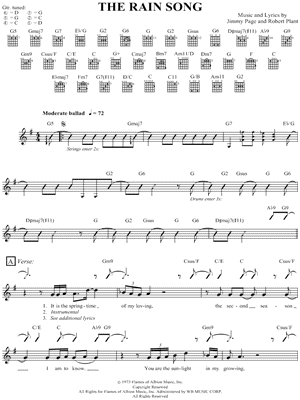
The second track from Houses of the Holy is The Rain Song. It had the working title Slush because of its easy listening mock orchestral arrangement. The ballad was released on March 28, 1973 after George Harrison, who was a fan, told John Bonham that Led Zeppelin never wrote ballads. In tribute to this the opening chords of The Rain Son is from the easily recognizable first line from George Harrison penned The Beatles song Something.
The Rain Song is over seven minutes long. The song was originally constructed by Jimmy Page at his home in Plumpton, England because he had recently installed a Vista studio console that was partially made up from the Pye Mobile Studio that the group used at the 1970 Royal Albert Hall performance.
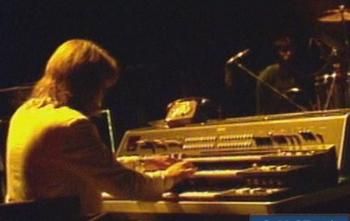
Page brought the completed melody arrangement to Robert Plant, who then wrote some lyrics. Plant considers these lyrics to be the best that he has ever written. To get the orchestral effect to the song John Paul Jones used a mellotron, while Page played a Danelectro guitar.
From late 1972 to 1977 Led Zeppelin immediately played The Rain Song right after The Song Remains the Same presenting the songs in the same chronological order as on the album. The setlist was organized in this manner because Page played his Gibson EDS-1275 double-necked guitar on both songs: the top, the 12-string neck, tuned to Standard tuning, for The Song Remains the Same, while using the alternate tuning Esus2 on the 6-string neck for the live performance of The Rain Song. This tuning is a step higher than what was used on the album, Dsus2 an "open page" alternative guitar tuning which required Plant to sing at a higher level.
THE RAIN SONG
This is the springtime of my loving - the second seasonI am to know
You are the sunlight in my growing- so little warmth I've felt before.
It isn't hard to feel me glowing - I watched the fire that grew so low.
It is the summer of my smiles - flee from me Keepers of the Gloom.
Speak to me only with your eyes. It is to you I give this tune.
Ain't so hard to recognize - These things are clear to all from time to time.
Talk Talk- I've felt the coldness of my winter
I never thought it would ever go. I curse the gloom that set upon us...
But that I love you so.
These are the seasons of emotion and like the wind they rise and fall
This is the wonder of devotion - I see the torch we all must hold.
This is the mystery of the quotient - a little rain must fall.
The Song Remains the Same is the first track off of Led Zeppelin's 1973 album Houses of the Holy.
This was Robert Plant's tribute to world music, reflecting his belief that music is universal.
Originally The Song Remains the Same was an instrumental with the working title The Oveture, before Plant put lyrics to it, after which the song became known as The Campaign before Led Zeppelin settled on The Song Remains the Same.
Zeppelin first performed the song live on their 1972 Japanese Tour Bootlegs from this tour show that the song did not have a settled title to it. Plant even called the song Zep while on stage in Tokyo. From late 1972 to 1975 The Song Remains the Same ( just as on Houses of the Holy) segued into The Rain Song. The Song Remains the Same would be the opening song for the 1977 and 1979 concerts, before being dropped from the set list for the 1980 European tour. The song was also performed at the 2007 Led Zeppelin reunion show at the O2 Arena.
For the album release Robert Plant's vocals were slightly sped up, while Jimmy Page played the overdubs on a Fender Telecaster guitar and a Rickenbacker 12-string guitar. In live performances, however, Jimmy played a Gibson EDS-1275 double neck 12-string.
Video from Earls Court Show in 1975
The Song Remains the Same
I had a dream. Crazy dream.
Anything I wanted to know, any place I needed to go.
Hear my song. People won't you listen now?
Sing along.
You don't know what your missing now.
Any little song that you know.
Everything that is small has to grow.
And it has to grow.
Na, na, na, na,wow!
California sunlight, Calcutta rain.
Honolulu starbright- the song remains the same.
Sing out Hare hare, dance the Hoochie Koo.
City lights are oh so bright , as we go sliding...sliding...sliding through.
Released on March 23,1973 by Atlantic RecordsHouses of the Holy is the fifth studio album from Led Zeppelin. The album's title is from Led Zeppelin to their fans who appeared at venues that they dubbed "Houses of the Holy" . This album became the first one to contain completely original music by the band and marks a musical turning point in the band.
Stargroves
Much of Houses of the Holy was recorded at The Rolling Stones frontman, Mick Jagger's former Berkshire County home, Stargroves, in the Spring of 1972. There was an earlier attempted recording of the album at Headly Grange.
At the recently installed personal studios of Jimmy Page and John Paul Jones many of the songs were produced as demos. Also because of the installment of the studios in their homes, they were able to complete the arrangements that had been laid down earlier. In particular, Page was able to furnish complete arrangements of 'The Rain Song' and 'Over the Hills and Far Away' , while Jones developed 'No Quarter' .
Olympic Studios - London
There was another round of recordings in May of 1972 at Olympic Studios and during Led Zeppelin's 1972 North American tour there was additional recording sessions at Electric Lady Studios in New York.
Some songs that were recorded at these various sessions, but did not make Houses of the Holy were, 'Black Country Woman', 'The Rover' and the title-track 'Houses of the Holy'. But these songs were kept and released on their subsequent album.
John Paul Jones
Houses of the Holy was a turning point in the style of Led Zeppelin music and in the band's lifespan. Jimmy Page layered his guitar riffs in his production techniques and moved away from the blues influence of previous albums. With'The Song Remains the Same'and it's intricate companion, 'The Rain Song' , Robert Plant's voice matured to a less open form of mysticism and fantasy as with the previous albums. Also on Houses of the Holy there were music styles that had not been heard on the other Led Zeppelin albums. 'D'yer Maker', for example is reggae-based and takes it's name from an old music hall joke: 'My wife went to the West Indies.' 'Jamaica?' 'No she went on her own accord.'; No Quarter has John Paul Jones' acoustic piano solo and atmospheric keyboard sounds featured; 'The Crunk is actually an attempted funk tribute to James Brown; and 'The Rain Song' is embellished by Jones on his newly owned mellotron. The albums final song, 'The Ocean', is dedicated to "the ocean" of fans who had amassed to Led Zeppelin concerts at this time of their career.
The cover of the album was inspired by Arthur C. Clark end of the novel'Childhood's End'. It is a collage of over thirty different photographs, that eventually became eleven, taken by Aubrey Powell at the Giants Causeway in County Antrim, Northern Ireland and the two children who modeled for the album cover were siblings, Stefan and Samantha Gates. The album cover was meant to be a full-color shoot by taking advantage of the morning and evening sun, but this was never achieved because of the miserable weather. So the pictures of the two children were shot in black and white instead of color and were multi-printed to create the effect of eleven individuals on the cover. The inside photo was that of the ancient real-life Celtic Dunluce Castle nearby.
In 1974 Houses of the Holy was nominated for a Grammy for in the category Best Album Package. In 2003 VH-1 ranked Houses of the Holy at # 6 on their VH-1's 50 Greatest Album Covers.
Houses of the Holy should have actually been released in August of 1972, but because of problems with the mix and artwork it was pushed back to January of 1973. This gave Led Zeppelin time to finish their Japanese tour and a 25 date tour of the UK, which would be the last time the band would ever tour their home country. But even with this pushed back date of January there were still snags in finishing the final product until Houses of the Holy was finally released on March 23, 1973.
Bonzo looking oh so thrilled about having his picture taken at the recording of Houses of the Holy
Reviews for the album were mixed with much of the criticism being directed toward 'The Crunge' and 'D'yer Maker' . According to some 'The Grunge' was totally unnecessary because Zeppelin had proven that it had a funk abundance the moment John Bonham's hand[grenade drums exploded over the intro to 'Good Times Bad Times' and had repeatedly demonstrated that "white rock musicians could do things with black funk music nobody else had even thought of." *
Houses of the Holy became the band's third album to top the British charts, entering at #1, making it Zeppelin's third album to top the charts there. But this only lasted for thirteen weeks before being replaced by it's predecessor, Led Zeppelin IV. While in America it was on the American charts for 39 weeks, 2 of the weeks at #1.
* From the book 'Led Zeppelin: When Giants Walked the Earth'