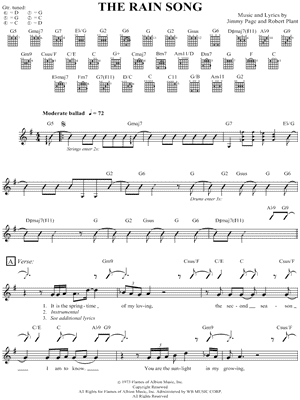
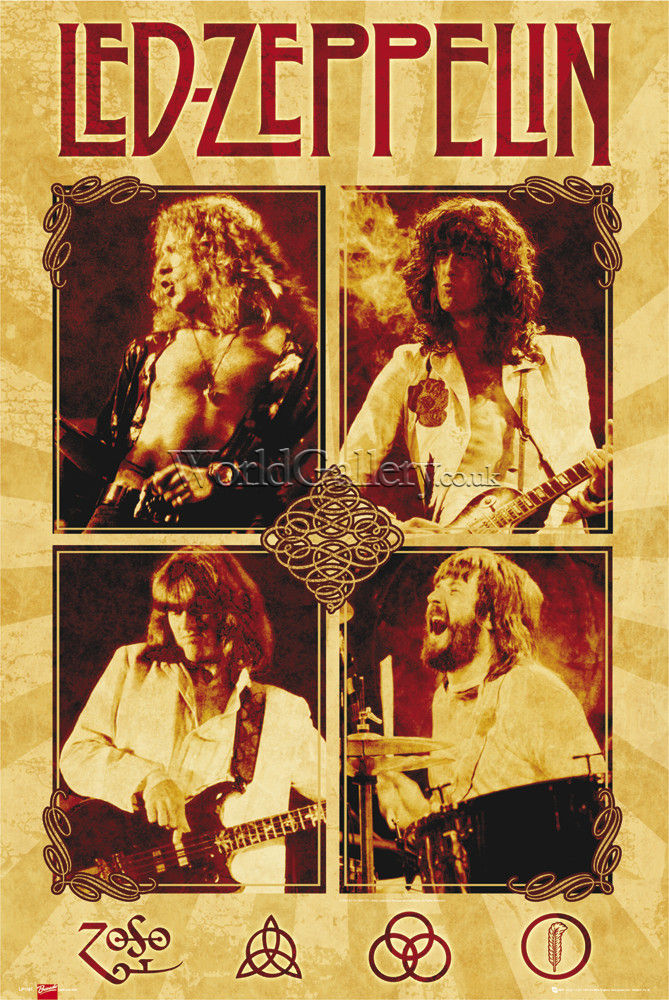
The second track from Houses of the Holy is The Rain Song. It had the working title Slush because of its easy listening mock orchestral arrangement. The ballad was released on March 28, 1973 after George Harrison, who was a fan, told John Bonham that Led Zeppelin never wrote ballads. In tribute to this the opening chords of The Rain Son is from the easily recognizable first line from George Harrison penned The Beatles song Something.
The Rain Song is over seven minutes long. The song was originally constructed by Jimmy Page at his home in Plumpton, England because he had recently installed a Vista studio console that was partially made up from the Pye Mobile Studio that the group used at the 1970 Royal Albert Hall performance.
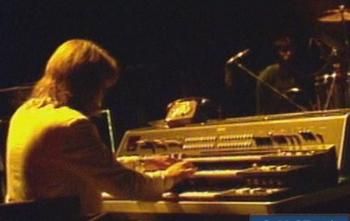
Page brought the completed melody arrangement to Robert Plant, who then wrote some lyrics. Plant considers these lyrics to be the best that he has ever written. To get the orchestral effect to the song John Paul Jones used a mellotron, while Page played a Danelectro guitar.
From late 1972 to 1977 Led Zeppelin immediately played The Rain Song right after The Song Remains the Same presenting the songs in the same chronological order as on the album. The setlist was organized in this manner because Page played his Gibson EDS-1275 double-necked guitar on both songs: the top, the 12-string neck, tuned to Standard tuning, for The Song Remains the Same, while using the alternate tuning Esus2 on the 6-string neck for the live performance of The Rain Song. This tuning is a step higher than what was used on the album, Dsus2 an "open page" alternative guitar tuning which required Plant to sing at a higher level.
THE RAIN SONG
This is the springtime of my loving - the second seasonI am to know
You are the sunlight in my growing- so little warmth I've felt before.
It isn't hard to feel me glowing - I watched the fire that grew so low.
It is the summer of my smiles - flee from me Keepers of the Gloom.
Speak to me only with your eyes. It is to you I give this tune.
Ain't so hard to recognize - These things are clear to all from time to time.
Talk Talk- I've felt the coldness of my winter
I never thought it would ever go. I curse the gloom that set upon us...
But that I love you so.
These are the seasons of emotion and like the wind they rise and fall
This is the wonder of devotion - I see the torch we all must hold.
This is the mystery of the quotient - a little rain must fall.
Released on March 23,1973 by Atlantic RecordsHouses of the Holy is the fifth studio album from Led Zeppelin. The album's title is from Led Zeppelin to their fans who appeared at venues that they dubbed "Houses of the Holy" . This album became the first one to contain completely original music by the band and marks a musical turning point in the band.
Stargroves
Much of Houses of the Holy was recorded at The Rolling Stones frontman, Mick Jagger's former Berkshire County home, Stargroves, in the Spring of 1972. There was an earlier attempted recording of the album at Headly Grange.
At the recently installed personal studios of Jimmy Page and John Paul Jones many of the songs were produced as demos. Also because of the installment of the studios in their homes, they were able to complete the arrangements that had been laid down earlier. In particular, Page was able to furnish complete arrangements of 'The Rain Song' and 'Over the Hills and Far Away' , while Jones developed 'No Quarter' .
Olympic Studios - London
There was another round of recordings in May of 1972 at Olympic Studios and during Led Zeppelin's 1972 North American tour there was additional recording sessions at Electric Lady Studios in New York.
Some songs that were recorded at these various sessions, but did not make Houses of the Holy were, 'Black Country Woman', 'The Rover' and the title-track 'Houses of the Holy'. But these songs were kept and released on their subsequent album.
John Paul Jones
Houses of the Holy was a turning point in the style of Led Zeppelin music and in the band's lifespan. Jimmy Page layered his guitar riffs in his production techniques and moved away from the blues influence of previous albums. With'The Song Remains the Same'and it's intricate companion, 'The Rain Song' , Robert Plant's voice matured to a less open form of mysticism and fantasy as with the previous albums. Also on Houses of the Holy there were music styles that had not been heard on the other Led Zeppelin albums. 'D'yer Maker', for example is reggae-based and takes it's name from an old music hall joke: 'My wife went to the West Indies.' 'Jamaica?' 'No she went on her own accord.'; No Quarter has John Paul Jones' acoustic piano solo and atmospheric keyboard sounds featured; 'The Crunk is actually an attempted funk tribute to James Brown; and 'The Rain Song' is embellished by Jones on his newly owned mellotron. The albums final song, 'The Ocean', is dedicated to "the ocean" of fans who had amassed to Led Zeppelin concerts at this time of their career.
The cover of the album was inspired by Arthur C. Clark end of the novel'Childhood's End'. It is a collage of over thirty different photographs, that eventually became eleven, taken by Aubrey Powell at the Giants Causeway in County Antrim, Northern Ireland and the two children who modeled for the album cover were siblings, Stefan and Samantha Gates. The album cover was meant to be a full-color shoot by taking advantage of the morning and evening sun, but this was never achieved because of the miserable weather. So the pictures of the two children were shot in black and white instead of color and were multi-printed to create the effect of eleven individuals on the cover. The inside photo was that of the ancient real-life Celtic Dunluce Castle nearby.
In 1974 Houses of the Holy was nominated for a Grammy for in the category Best Album Package. In 2003 VH-1 ranked Houses of the Holy at # 6 on their VH-1's 50 Greatest Album Covers.
Houses of the Holy should have actually been released in August of 1972, but because of problems with the mix and artwork it was pushed back to January of 1973. This gave Led Zeppelin time to finish their Japanese tour and a 25 date tour of the UK, which would be the last time the band would ever tour their home country. But even with this pushed back date of January there were still snags in finishing the final product until Houses of the Holy was finally released on March 23, 1973.
Bonzo looking oh so thrilled about having his picture taken at the recording of Houses of the Holy
Reviews for the album were mixed with much of the criticism being directed toward 'The Crunge' and 'D'yer Maker' . According to some 'The Grunge' was totally unnecessary because Zeppelin had proven that it had a funk abundance the moment John Bonham's hand[grenade drums exploded over the intro to 'Good Times Bad Times' and had repeatedly demonstrated that "white rock musicians could do things with black funk music nobody else had even thought of." *
Houses of the Holy became the band's third album to top the British charts, entering at #1, making it Zeppelin's third album to top the charts there. But this only lasted for thirteen weeks before being replaced by it's predecessor, Led Zeppelin IV. While in America it was on the American charts for 39 weeks, 2 of the weeks at #1.
* From the book 'Led Zeppelin: When Giants Walked the Earth'
I decide that today's would be Catherine, Duchess of Cambridge, nee Middleton, in a red Alexander McQueen dress set that she wore to the Queen's Diamond Jubilee River Pageant Flotilla on June 2,2012. Yes, I know two other people have worn the dress, one won't be mentioned because she stuck her rump in the air and made a fortune and the other one, Tulisa, I have never heard of. That silver pair of shoes that the one who shall remain nameless wore is not good. If Tulisa had worn a solid or a peep toe black leather pump instead of looking like she had black spiders on her feet, she would have looked better. But with that being said, Kate outshined them by unmeasurable fathoms. She looked quite stunning in the red Alexander McQueen design and nude coloured shoes. BRAVO!
"When the Levee Breaks" is the eighth and last song on Led Zeppelin IV. "When the Levee Breaks" was originally written and recorded by Delta blues musician and songwriter Kansas Joe McCoy and his wife, American blues guitarist, vocalist and songwriter, Memphis Minnie in 1929. This song is in reaction to the Great Mississippi Flood of 1927, that ravaged the state of Mississippi and surrounding areas. Many of the homes and the agricultural economy in the Mississippi Basin were destroyed and devastated. As a result, many people fled to the cities in the Midwest, which contributed to the "Great Migration" of African-Americans in the first half of the 20th century. "When the Levee Breaks" main focus is of Greenville, Mississippi when more than 13,00 residents in and around the area evacuated to a nearby, unaffected levee for its shelter at high ground. The commotion that would have been caused if this and other levees had broken is the underlying theme of the song.
The original lyrics to "When the Levee Breaks" by Kansas Joe McCoy and Memphis Minnie:
WHEN the LEVEE BREAKS
If it keeps on rainin', the levees goin' to break
If it keeps on rainin', the levees goin' to break
And the water gonna come in, and have no place to stay.
Well all last night I sat on the levee and moan
Well all last night I sat on the levee and moan
Thinkin' 'bout my baby and my happy home
If it keeps on rainin', the levees goin' to break
If it keeps on rainin', the levees goin' to break
And all these people have no place to stay
Now look here mama what am I to do?
Now look here mama what am I to do?
I ain't got nobody to tell my troubles to
I works on the levee mama both night and day
I works on the levee mama both night and day
I ain't got nobody, keep the water away
Oh cryin' won't help you, prayin' won't do no good
Oh cryin' won't help you, prayin won't do no good
When the levee breaks, mama, got you to lose
I works on the levee, mama both night and day
I works on the levee, mama both night and day
I works so hard, to keep the water away
I had a woman, she wouldn't do for me
I had a woman, she wouldn't do for me
I'm goin' back to my used to be
I's a mean old levee, cause me to weep and moan
I's a mean old levee, cause me to weep and moan
Gonna leave my baby, and my happy home
Now for the Led Zeppelin version of "When the Levee Breaks". It was recorded at Headley Grange in December of 1970 to March of 1971 with the use of the Rolling Stones Mobile Studio. As with the other songs on ''Led Zeppelin IV'' the song was tried unsuccessfully to be recorded at Island Studios at the start of the recording sessions.
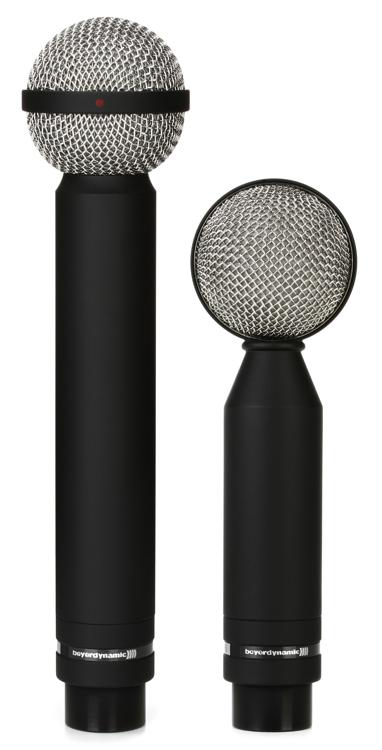
According to Jimmy Page, the song's structure "was a riff that I'd been working on, but Bonzo's drum sound really makes a difference on that point." Engineer Andy Jones recorded the famous drum performance by putting John Bonham and a new Ludwig drum kit at the bottom of a stairwell and recording the drum performance using two Beyerdynamic M160 microphones, at the top of the stairwell, giving the distinctive resonant but slightly muffled sound.
Back aat the Rolling Stones' mobile studio, Bonzo compressed the drum sound through two channels and added an echo through Pages Binson echorec 2 unit.
Page recorded Robert Plant's harmonica part using the backward echo technique, putting the echo ahead of the sound when mixing, creating a distinct effect.
Binson Echorec 2
"When the Levee Breaks" was recorded at a different tempo, then slowed down, which explains the 'sludgy' sound particularly on the guitar and harmonica solos. Because of the heavy studio production of the song, "When the Levee Breaks" was difficult to recreate live.Led Zeppelin only performed the song in the early stages of their 1975 U.S. Tour.
This is also the only song not to be re-mixed after a supposedly disastrous mixing job in the U.S. ( the rest of the tracks were mixed again in England). The original mixing of the song was kept in its original form.
WHEN the LEVEE BREAKS
(Led Zeppelin version)
If it keeps on rainin', the levee's goin to break,
If it keeps on rainin', the levee's goinin' to break.
When the Levee Breaks I'll have no place to stay.
Mean old levee taught me to weep and moan,
Lord, the mean old levee taught me to weep and moan.
Got what it takes to make a mountain man leave his home,
Oh, well, oh, well,oh, well.
Don't it make you fell bad,
When you're tryin' to find your way home,
You don't know which way to go?
If you go South,
They go no work to do,
If you don't know about Chicago.
Cryin' won't help you, prayin' won't do you no good,
Now, cryin won't help you, prayin' won't do you know good.
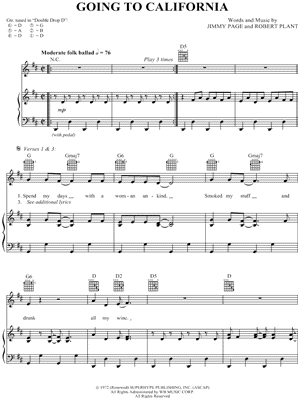
"Going to California" is the seventh song on Led Zeppelin IV and it was released on November 8, 1971. It has a wistful folk-style sound, with Plant on lead vocals, John Paul Jones played the mandolin and Page played an acoustic guitar. It is also 3:31 long.
The song is reportedly about Joni Mitchell, who was the target of both Jimmy Page and Robert Plant infatuation. Plant would often say the name "Joni" after the following stanza, when "Going to California" was performed live:
To find a queen without a king,
They say she plays the guitar and cries and sings
In a 2002 'Spin' magazine interview, Plant said that the song " might be embarrassing at times lyrically, but it did sum up a period of my life when I was 22." In another interview with the same magazine, in 2007, Plant stated that the song was about "Me reflecting on the first years of the group, when I was about...20, and was struggling to find myself in the midst of all the craziness of California and the band and the groupies...."
"Going to California" started out as a song about California earthquakes and when Jimmy Page, audio engineer Andy Johns and band manager Peter Grant went to Los Angles to mix the album, they by chance experienced an earthquake. At this time the title of the song was "Guide to California".
At Led Zeppelin concert, "Going to California" was performed during the bands acoustic sets, first played on their Spring 1971 tour of the United Kingdom. Led Zeppelin's live performance of the song at Earl's Court 1975 is on the second disc of the Led Zeppelin DVD.
Plant performed the song on his solo tours of 1988/1989 and at the Knebworth Silver Clef show in 1990. He again performed it on his 2005 Mighty ReArranger tourwith a synthesizer and a double bass added
GOING TO CALIFORNIA
Spent my days with a woman unkind,
Smoked my stuff and drank all my wine.
Made up my mind to make a new start,
Going to California with an aching in myheart.
Someone told me there's a girl out there
With love in her eyes and flowers in her hair.
Took my chance on a big jet plane
Never let them tell you that they're all the same.
The sea was red and the sky was grey,
Wondered how tomorrow could ever follow today.
The mountains and the canyons started to tremble and shake
As the children of the sun began to wake
Seems the wrath of the Gods
Got a punch in the noseand it started to flow;
I think I might be sinking,
Throw me a line if I reach it in time
I'll meet you up there where the path
Runs straight and high.
To find a queen without a king;
They say she plays guitar and cries and sings.
La, la, la, la
Ride a white mare in the footsteps of dawn
Tryin' to find a woman who's never, never, never been born.
Standing on a hill in my mountain of dreams,
Telling myself it's not as hard, hard, hard, as it seems.
The sixth song from 'Led Zeppelin IV' is "Four Sticks". As the title suggests, John Bonham used four sticks, at the same time, on this track. This is because he was so frustrated with the fact that he could not get the track down right during the recording session at Island Studios, that Bonham decided to take out his frustration on the drums and picked up two sets of drumsticks and just started beating away on the drums as hard as he could. This resulted in Bonham recording the perfect take and that was the one Led Zeppelin kept. But apparently John Bonham wasn't the only one that was having problems with the recording of "Four Sticks", for it took more takes that usual. John Paul Jones played a VCS3 synthesizer on the track.
Jimmy Page once said of "Four Sticks",: " It was supposed to be abstract." The abstract effect is further achieved by the unusual meter signature, aka time signature, of the song., featuring riffs in a mixture of 5/8 and 6/8 time signatures. Out of frustration over another failed take of the recording, Jimmy Page began to play an improvised guitar riff, which was later developed into the the albums second song - "Rock & Roll".
"Four Sticks" has only been performed live once, in Copenhagen, Denmark on Led Zeppelin's 1971 European tour and has been preserved only on bootleg recording.
"Four Sticks" is 4:44 long and as a single was released on February 21,1972.
FOUR STICKS
Oh, Baby, it's cryin' time, Oh, Baby, I got to fly.
Got to try to find a way, Got to try to get away,
'Cause you know I gotta get awayfrom you, Babe.
Oh, Baby, the river's red, Oh, Baby, in my head.
There's a funny feelin' going on, I don't think I can hold out long.
* And when the owl cries in the night,
Oh Baby, Baby, when the pines begin to cry,
Baby, bay, Baby, how do you feel?
Craze, Baby, the rainbow's end, Mmm, Baby, it's just a den
For those who hide, Who hide their love to the depths of life
"Misty Mountain Hop" is the fifth song on Led Zeppelin IV and was released as a single on December 2,1971. Even though it was the B-side of "Black Dog" in Australia and the U.S., it still got a lot of airplay on FM radio stations. The song is 4:38 long and of course "Misty Mountain Hop" was also recorded at Headly Grange.
In a musical manner the song is of a medium tempo with bassist John Paul Jones playing the electric piano in the opening sequence. It has a notable presence of layered keyboard and guitar parts, which makes it melodically solid and is driven by one of John Bonham's most powerful recorded studio performances. Featuring a memorable riff, on which Jones and Page harmonize using keyboard and guitar. The repeating riff in "misty Mountain Hop" sounds like a funk rock bassline and is based on note A G E. In the second half of the second verse, at 2:11, mistakenly fall out of sync with one another. But Led Zeppelin thought the rest of the take was too good, so they kept the mistake in the song.
One of the most common interpretations of the lyrics of "Misty Mountain Hop" is that they refer to an encounter with police in the park after smoking marijuana and leaving to go to the Misty Mountains ( where the spirits fly) which seems to be a reference to "The Hobbit" by J.R.R. Tolkein. Another variation is that the song is about a 'love-in' at a park near London that was broken up by police.
On the 1971 Led Zeppelin European Tour in Copenhagen, Denmark "Misty Mountain Hop" made its debut and was regularly played live at Led Zeppelin concerts from late 1972 through 1973, often directly linking into "Since I've Been Loving You" (from Led Zeppelin III). "Misty Mountain Hop" was also performed at Knebworth in 1979. Because of a broken string on his main Les Paul Jimmy Page used a 1977 Gibson RD Artist guitar, for the second of two performances. The surviving members of Led Zeppelin performed "Misty Mountain Hop" at the Atlantic Records 40th Anniversary concert in 1988 with John Bonham's son, Jason, on drums and then again for the 21st birthday of Robert Plant's daughter the next year. "Misty Mountain Hop" was again performed at the Led Zeppelin reunion show at the O2 Arena, London on December 10, 2007.
___________________________________
MISTY MOUNTAIN HOP
Walkin' in the park the other day, Baby,
What do you, what do you think I saw?
Crowds of people sittin' on the grass with flowers in there hair said,
"Hey, Boy do you want to score?"
And you know how it is;
I really don't know what time was, woh, oh,
So I asked them if I could stay awhile.
I didn't notice but it had got very dark and I was really,
Really out of my mind.
Just then a policeman stepped up to me and asked us said
"Please, hey,would we care all to get in line,
Get in line."
Well you know,
They asked us to stay and have some tea and have some fun,
Oh, oh, he said that his friends would all drop by, ooh.
Why don't you take a good look at yourself and describe what you see,
And Baby, Baby, Baby, do you like it?
There you sit, sitting spare like a book on a shelf rustin'
Ah, not trying to fight it.
You really don't care if they're coming, oh, oh,
I know that it's all a state of mind.
If you go down the streets today, Baby you better,
You better open your eyes,
Folks down there really don't care, don't care, really don't
All right now for one of the greatest, some may even argue it is the greatest, rock song in music history..."Stairway to Heaven".
"Stairway to Heaven" was released on November 8,1971 by Led Zeppelin and it runs for 8 minutes and 2 seconds. The song, which is the fourth song on Led Zeppelin IV, is composed of several sections, that increase in tempo and volume as the song progresses.The last section is a high tempo hard rock section highlighted by Jimmy Page's intricate guitar solo.
Led Zeppelin started planning "Stairway to Heaven" in early1970, when they decided to create a new epic song to replace "Dazed and Confused" as the centerpiece of their concerts.Jimmy Page would work on the song in 8-track studio he had installed in his boathouse, trying out different sections on his guitar. By April he was telling journalists that their new song could be 15 minutes long and described it as something that would "build in climax" with John Bonham's drums not coming in for sometime. In October of 1970, after nearly touring constantly for 18 months Page and Plant worked on the song in a Welsh cottage called Bron-yr-Aur, where the started writing songs for the album. Led Zeppelin started writing "Stairway to Heaven' in December of 1970 at Basing Street Studios, a new Island Records studio, in London.
To complete the song and the rest of the album Led Zeppelin went to the former poorhouse, Headley Grange in Liphook Road, Headley, Hampshire where they recorded the album with the Rolling Stone mobile studio.
Page kept a cassette recorder close by and the idea for "Stairway to Heaven" came together in bits and pieces of taped music. Jimmy Page states:
"I had these pieces, these guitar pieces,that I wanted to put together. I had a whole idea of a piece of music that I really wanted to try and present to everybody and try to come to terms with. Bit difficult really,it started on acoustic and as you know it goes through to electric parts. But we had various run-through [at Headley Grange] where I was playing the acoustic guitar. Robert was sitting in the corner or rather leaning against the wall and as I was routining the rest of the band with this idea and this piece, he was just writing. And all of a sudden he got up and started singing, along with another run-through and he had 80% of the words there... I had these sections and I knew what order they were going to be in, but it was just a matter of getting everybody to feel comfortable with each gear shift that was going to be coming."
John Paul Jones, Led Zeppelin's bassist, recalled this presentation of "Stairway to Heaven" following its beginning at Bron-Yr-Aur:
"Page and Plant would come back from the Welsh mountains with guitar intro and verse. I literally heard it in front of a roaring fire in a country manor house!I picked up a base recorder and played a run-down riff which gave us an intro, then I moved into a piano for the next section, dubbing on the guitars."
In a 1977 interview, Page elaborated:
"I do have the original tape that was running at the time we ran down "Stairway to Heaven"completely with the band. I'd worked it all out the night before with John Paul Jones, written down the changes and things. All this time we were all living in a house and keeping pretty regular hours together, so the next day running it down. There was only one place where there was a slight rerun. For some unknown reason Bonzo couldn't get the timing right on the twelve-string part before the solo. Other than that it flowed pretty quickly."
The first attempt at the lyrics written by Robert Plant sitting by an evening fire at Headley Grange, were partly spontaneous and Page claimed that " a huge percentage of the lyrics were written then and there.'" Page was strumming the intro chords when a flash of inspiration came to Robert Plant. Said Plant: "I was holding a pencil and paper and for some reason I was in a very bad mood. Then all of a sudden my hands were writing out the words 'There's a lady who's sure all that glitters is gold/ And she buying a stairway to heaven.' I just sat there and looked at them and almost leapt out of my seat." Plant's explanation for the lyrics was that it "was some cynical aside about a woman getting everything she wanted all the time without giving back any thought or consideration. The first line begins with a cynical sweep of the hand... and it softens after that."
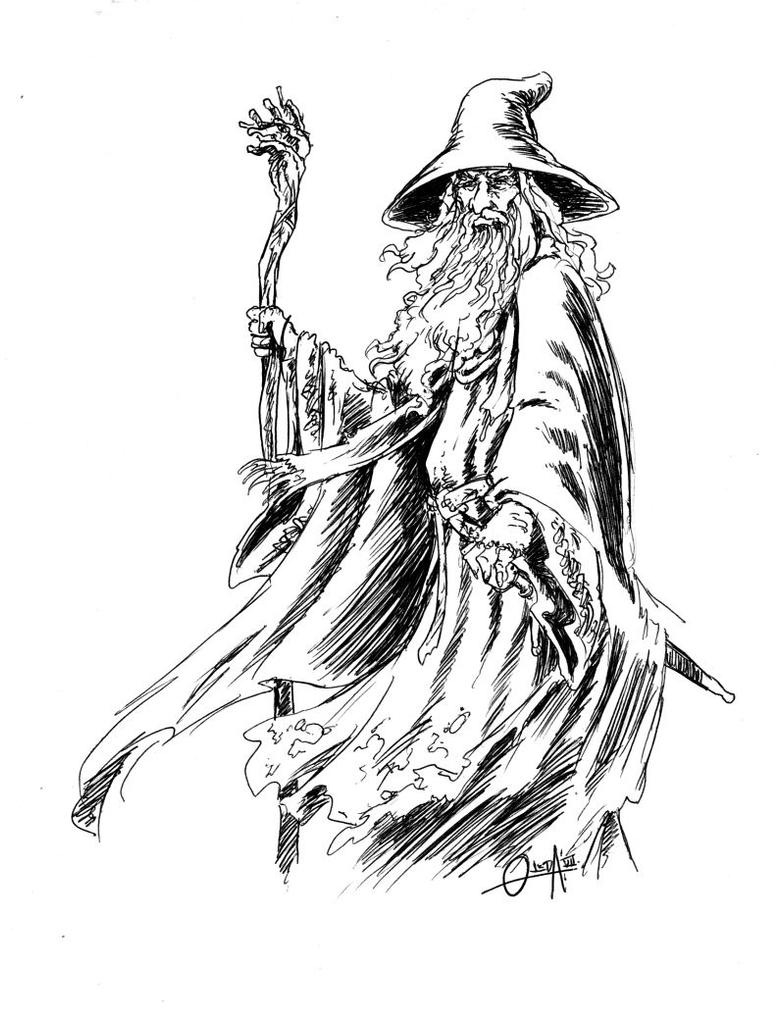
The lyrics to "Stairway to Heaven" is a reflection of Robert Plant's reading at the time. Plant, who is a great admirer of all things mystic, Celtic writings and old English legends and lore, had been reading J.R.R. Tolkien's "Lord of the Rings" and "Magic Arts in Celtic Britain" by Lewis Spence.The Tolkien influence can be heard in the phrase "In my thoughts I have seen Rings of Smoke Through the Trees." which could be a reference to Gandalf , the wizard in "Lord of the Rings",making smoke rings when he is puffing his pipe. There is also a correlation to the lady in the song and Lady Galadriel , the Queen of the Elves, who lives in Lothlorien, the golden forest.
On March 5,1971 Led Zeppelin performed "Stairway to Heaven" for the first time in Belfast, Northern Ireland and according to John Paul Jones the people were not impressed. The audience came to hear songs they knew- like - "Whole Lotta Love".
When the band started the U.S. leg of their tour the song got a better reception.From 'Led Zeppelin: The Definitive Biography' by Ritchie Yorke, Page said of playing the song at an August 1971 show at the Los Angeles Forum: "I'm not saying the whole audience gave us a standing ovation- but there was a sizable standing ovation there. And I thought ' This is incredible because no one's heard this number yet. This is the first time hearing it!' It obviously touched them, so I knew there was something with that one."
The world premiere of " Stairway to Heaven" was recorded on April 1, 1971 at the Paris Cinema, in Lower Regent Street,London, in front of a live audience and three days later it was broadcasted on the BBC. After that the song was performed at almost every following concert,unless there were technical issues or those rare cut short due to curfews. 1975 marked the time when"Stairway to Heaven" got it's place as the regular finale in every Led Zeppelin concert. But, after their U.S.concert tour in 1977, Plant began to tire of singing "Stairway to Heaven". According to him " There's only so many times you can sing it and mean it...It just becomes sanctimonious." Led Zeppelin's last performance of this song, as a whole band, was on July 7,1980 in Berlin ( in the Western Sector I would imagine); this version was also one of the longest, lasting for about 15 minutes.
When playing the song live, the band often extend the song over 10 minutes, with Plant adding lyrical ad-libs and Page playing an extend guitar solo, using a Gibson EDS-1275 double neck guitar so that he would not have to switch between a six string guitar to a twelve string guitar.
At the 1985 concert event Live Aid, "Stairway to Heaven" was played by the surviving members of Zeppelin and in 1988 at the Atlantic Records 40th Anniversary concert with John Bonham's son, Jason Bonham, on drums and as an instrumental by Jimmy Page on his solo concert tours.
By the late 1980's , Plant made his negative feelings towards the song clearer in an interview. He stated in 1988:
"I'd breakout into hives if I had to sing ("Stairway to Heaven") in every show. I wrote those lyrics and found that song to be of some importance and consequence in 1971, but 17 years later, I don't know. It's just not for me. I sang it at the Atlantic Records show because I'm an old softie and it's my way of saying thank you to Atlantic because I've been with them for 20 years. But no more "Stairway to Heaven" fo me."
But by the mid 1990's, Plant had apparently a softer view of the song. During the Page and Plant tours instead of playing the final notes of "Babe I'm Gonna Leave You"they played the first few bars of "Stairway to Heaven". In 1994, at a Tokyo news station, they performed an acoustic version for Japanese television. Also, thy performed the song at O2 Arena on December 10,2007 as part of the Led Zeppelin reunion show.
Robert Plant cites the most unusual performance of "Stairway to Heaven" as being at Live Aid when Duran Duran was at the side of the stage crying. Plant stated "... there was something quite surreal about that."
The legacy of "Stairway to Heaven" is that of high regard. It is often rated as among one of the greatest rock songs of all time. Although the song was released in 1971 it wasn't until 1973 that it achieved it's "anthemic" status. Recalls Jimmy Page I knew it was good, but I didn't know it was going to be like an anthem... But I knew it was the gem of the album, sure."
"Stairway to Heaven" was put into the Rock and Roll Hall of Fame's 500 Songs that Shaped Rock 'n' Roll, in 1994. The English rock magazine 'Classic Rock', in 1999,listed it as the #1 song of the Best Songs Ever and was placed #31 on Rolling Stone magazine's "500 Greatest Rock Songs of All Time" Despite never having been officially released as a single, it is one of the most requested song on FM radio in the United States during the 1970's. Through download sales promoting Led Zeppelin's compilation album "Mothership", "Stairway to Heaven" hit #37 in November of 2007 on the U.K. Singles Chart.
In the late '90's the trade magazine 'Monday Morning Replay' reported that "Stairway to Heaven" was still played 4,203 times a year by the 67 largest AOR (album-oriented rock) radio stations in the U.S. ASCAP, American Society of Composers, Authors and Publishers, refuse to release exact figures on how many it has been since it has been released, but that on each AOR station in America, the song was played 5 times a day, during the first 3 months of existence; twice a day for the next 9 months; once a day for the next 4 years;and 2 to 3 times a week for the next 15 years. There are roughly 600 AOR and Classic Rock stations in the U.S., which means "Stairway to Heaven"has been broadcasted a minimum of 2,874 times. At 8 minutes per spin, roughly 23 million minutes-almost 44 years- have been devoted to the song. So far.
STAIRWAY TO HEAVEN
There's a Lady Who's Sure All That Glitters is Gold.
The second track from Led Zeppelin Iv is "Rock and Roll" with a guest appearance by The Ian Smith, Rolling Stones pianist. The song is based on one of the most popular structures in rock 'n' roll, the 12 bar blues progression (in A). "Rock and Roll" is one of the bands most well known songs. "Rock and Roll" was released on March 21,1972.
Jimmy Page said that "Rock and Roll" was written in a spontaneous jam session, while the band was trying to finish "Four Sticks". John Bonham played the introduction to Little Richard's "Keep a Knockin' " and Jimmy Page added a guitar riff. The tapes were rolling and 15 minutes later the basis for the song was down.
"Rock and Roll" is one of the few songs in which all four members share composing credit.
When performing the song Plant would usually switch around the second and third verses.
"Rock and Roll" was a key component of Led Zeppelin's set list at their concerts from 1971 on. A first, Robert Plant referred to it on stage as "It's been A Long Time", which, of course, is the first line of the song. It was elevated, in 1972, to the opening number of all concert performances and it stayed that way until 1975. For the bands 1977 North American tour "Rock and Roll" became a part of a medley encore with"Whole Lotta Love" and in 1979 and 1980 it became an encore in its own right.
"Rock and Roll" peaked on US Billboards Hot 100 Singles Chart at # 47; US Cash Box Top 100 Singles Chart at # 42: and US Record World 100 Tops Chart at #38.
( I'm wondering if hind-sight is 20/20 with Zeppelin songs, because it seems that there weren't too many, I guess mainstream people liked them and their songs).
ROCK AND ROLL
It's been a long time dince I rock and rolled
It's been a long time since I did the stroll
Ooh let me get back, let me get back,
Let me get back,mm baby, where I come from.
It's been a long time, been a long time
Been a long lonely, lonely, lonely, lonely, lonely time
Yes it has.
It's been a long time since the book of love,
I can't count the tears of a life with no love,.
Carry me back, carry me back,
Carry me back, baby,where I come from.
It's ben a long time, been long time,
Been along lonely, lonely, lonely, lonely, lonely time.
Seems so long since we walked in he moonlight
Making vows that just can't work right.
Open your arms, open your arms,
Open your arms, baby, let me come running in.
It's been a long time,been along time
Been a long lonely, lonely, lonely, lonely, lonely time.
_____________________________________
The Battle of Evermore
"The Battle of Evermore is the third track on Led Zeppelin IV. It is a folk rock duet sung by Robert Plant and English singer-songwriter, Sandy Denny that was released on November 8, 1971. The Song is well known for its acoustic guitar and mandolin playing.
"The Battle of Evermore" tune was written by Jimmy Page while he was experimenting with a mandolin that was owned by John Paul Jones. In 1977 Pages aid that the song was made up on the spot by Both Plant and himself. Even though page had never played the mandolin before, he picked up Jones' and wrote up the chords and the whole thing in one sitting.
At the time Robert Plant had been reading Scottish folklore and it was inspiration for the song lyrics. Like some of the bands other songs, "The battle of Evermore" makes a reference to "Lord of the Rings". he also felt that another voice was needed to tell the story and for the recording, so English fol singer, Dandy Denny was invited to do a duet with Plant. Plant played the role of the narrator and Denny represented the town crier.
Sandy Denny, January 6,194- April21,1978
To thank her for her contribution to the song, Denny was given her own symbol on the on the album sleeve of three pyramids. This is the only song Led Zeppelin ever to have a guest vocalist.
The "Battle of Evermore" was played at Led Zeppelin concerts during the 1977 concert tour of America. For these live performances, John Paul Jones sang Denny's part with Plant and played acoustic guitar while Page played the mandolin. John Bonham would at times sing Denny's vocal part instead of Jones.In 1994, Page and Plant also recorded a version of "Battle of Evermore" for their album Four Quater: Jimmy Page and Robert Plant Unledded. British singer Najma Akhtar sang Sandy Denny's part.
BATTLE OF EVERMORE
Queen of the Light took her bow
And then she turned to go
The Prince of Peace embraced the gloom
And walked the night alone.
Oh, dance in the dark of night
Sing to the morning light.
The dark Lord rides in force tonight
And time will tell us all.
Oh, throw down your plow and hoe
Rest not to lock your homes.
Side by side we wait the might
Of the darkest of them all.
I hear the horses' thunder down in the valley blow.
I'm waiting for the angels of Avalon, waiting for the eastern glow.
The apples of the valley hold
The seeds of happiness
The ground is rich from tender care,
Repay, do not forget, no, no,
Dance in the dark of night
Sing to the morning light.
The apples turn to brown and black, the tyrants face is red.
Oh war is the common cry, Pick up your swords and fly.
The sky is filled with good and bad that mortals never know.
Oh, well,the night is long, The beads of time pass slow,
Tired eyes on the sunrise, Waiting for the eastern glow.
The pain of war can not exceed the woe of the aftermath,
The drums will shake the castle wall, the ring wraiths ride in black, Ride on.
Sing as you raise your your bow,
Shoot straighter than before.
No comfort has the fire at night that lights the face so cold.
Oh dance in the dark of night,
Sing to the mornin' light.
The magic runes writ in gold to bring the balance back.
Bring it back.
At last the sun is shining, The clouds of blue roll by,
With the flame of the dragon of darkness, the sunlight blinds his eyes.
In honour of the 40th Anniversary of "Led Zeppelin IV" , I thought I would post all of the songs on the album. Some post will be about one song and others, hopefully most of the post, will have two songs. I can say for certain that "Black Dog" and "Stairway to Heaven" will be by themselves. I just think it would be disrespectful to "Stairway to Heaven" to have another song posted wit it. And because of that, it leaves an odd number of songs and being that "Black Dog" is the first song I'd thought I would go and that song by itself too.
"Black Dog" is the lead off track of Led Zeppelin's fourth album Led Zeppelin IV, released in1971. "Black Dog" was released as a single in the United States and Australia, with "Misty Mountain Hop"on the B-side.The song reached # 9 on US Cash Box Top 100 Singles Chart, #15 on US Billboard Hot 100 Chart and # 10 on the US Record World 100 Top Pops. In Australia "Black Dog" went to # 9 on their Go-Set Top 40 Single chart.
The song took it's name from a black Labrador retriever that was wondering around the ground of Headley Grange during the recording. The dog has nothing to do with the song lyrics, which are about the desperate desire for a woman's love and because of that resulting in happiness.Regarding the lyrics to the song, Plant later stated, "Not all my stuff is meant to be scrutinized. Things like "Black Dog" are blatant, let's-do-it-in-the-bath type things,but they make their point just the same". It took only two takes for Plant to record the vocals to the song.
"Black Dog" is built around the call-and-response dynamic between the band and the singer; the start and stop a capella verses were inspired by Fleetwood Mac's 1969 song "Oh Well".
The guitar sounds at the beginning are those of Jimmy Page warming up his electric guitar. He called it "waking up the army of guitars" - which are multitrack recorded in unisonwith an electric bass guitar providing the song's signature.
During the outro-solo (in music, Conclusion) Robert Plant can be heard wailing and moaning in the background. At around the 4 minute mark Plant hits his highest note on any Led Zeppelin studio recording. He reaches it at 3:49 mark of the song, between the second and third repetition of the fade off riff during the guitar solo.
"Black Dog" was first played on March 5,1971 in Belfast, Northern Ireland at Belfast Ulster Hall.It was then retained for each subsequent concert tour until 1973. It was used in an encore medley with "Whole Lotta Love" in 1975, but was hardly used in Zeppelin's 1977 concert tour of the United States. It was used again for the Knebwoth festival of 1979 and the 19890 Tour of Europe. For these last performances in 1980, Page introduced the song from the stag.