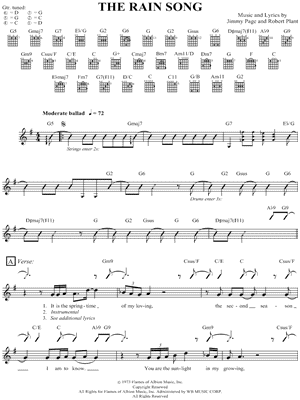
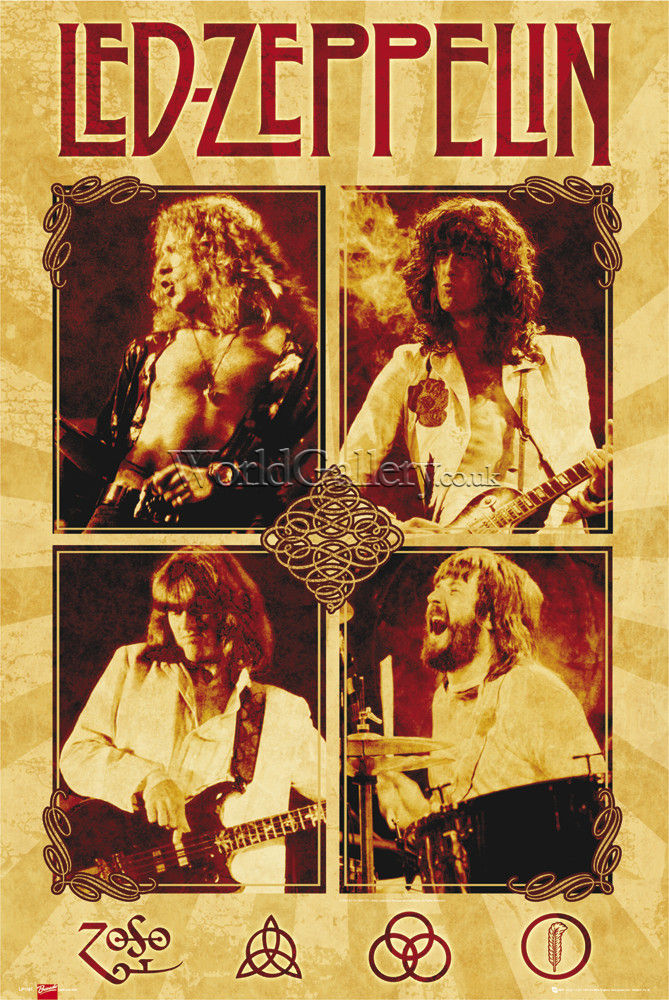
The second track from Houses of the Holy is The Rain Song. It had the working title Slush because of its easy listening mock orchestral arrangement. The ballad was released on March 28, 1973 after George Harrison, who was a fan, told John Bonham that Led Zeppelin never wrote ballads. In tribute to this the opening chords of The Rain Son is from the easily recognizable first line from George Harrison penned The Beatles song Something.
The Rain Song is over seven minutes long. The song was originally constructed by Jimmy Page at his home in Plumpton, England because he had recently installed a Vista studio console that was partially made up from the Pye Mobile Studio that the group used at the 1970 Royal Albert Hall performance.
Page brought the completed melody arrangement to Robert Plant, who then wrote some lyrics. Plant considers these lyrics to be the best that he has ever written. To get the orchestral effect to the song John Paul Jones used a mellotron, while Page played a Danelectro guitar.
From late 1972 to 1977 Led Zeppelin immediately played The Rain Song right after The Song Remains the Same presenting the songs in the same chronological order as on the album. The setlist was organized in this manner because Page played his Gibson EDS-1275 double-necked guitar on both songs: the top, the 12-string neck, tuned to Standard tuning, for The Song Remains the Same, while using the alternate tuning Esus2 on the 6-string neck for the live performance of The Rain Song. This tuning is a step higher than what was used on the album, Dsus2 an "open page" alternative guitar tuning which required Plant to sing at a higher level.
THE RAIN SONG
This is the springtime of my loving - the second seasonI am to know
You are the sunlight in my growing- so little warmth I've felt before.
It isn't hard to feel me glowing - I watched the fire that grew so low.
It is the summer of my smiles - flee from me Keepers of the Gloom.
Speak to me only with your eyes. It is to you I give this tune.
Ain't so hard to recognize - These things are clear to all from time to time.
Talk Talk- I've felt the coldness of my winter
I never thought it would ever go. I curse the gloom that set upon us...
But that I love you so.
These are the seasons of emotion and like the wind they rise and fall
This is the wonder of devotion - I see the torch we all must hold.
This is the mystery of the quotient - a little rain must fall.
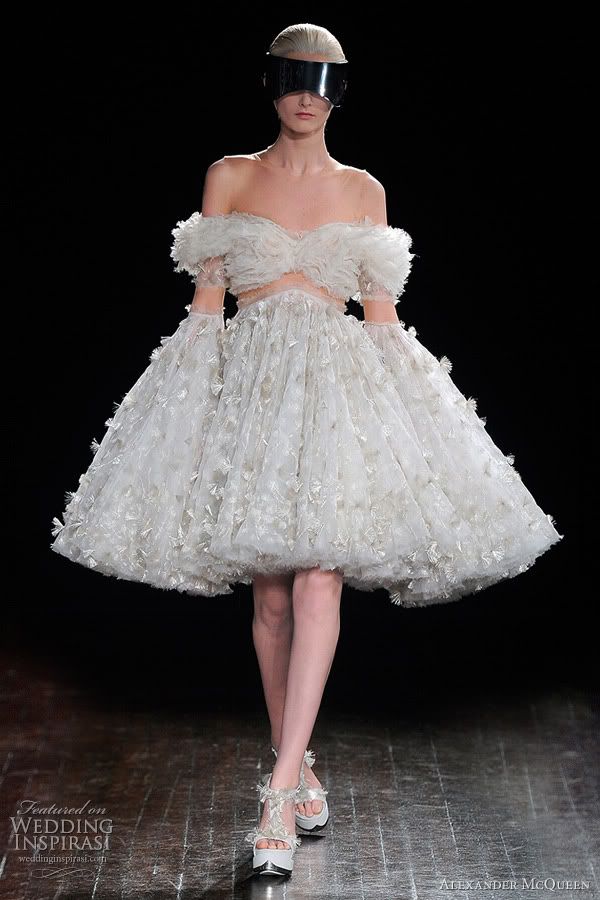
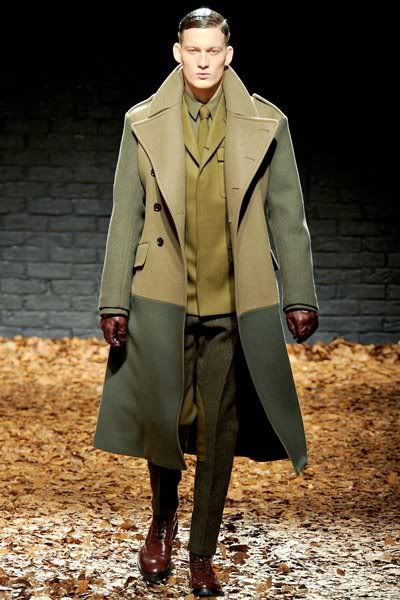
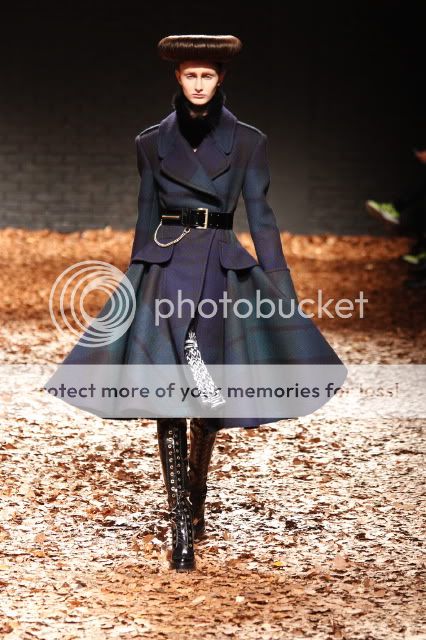
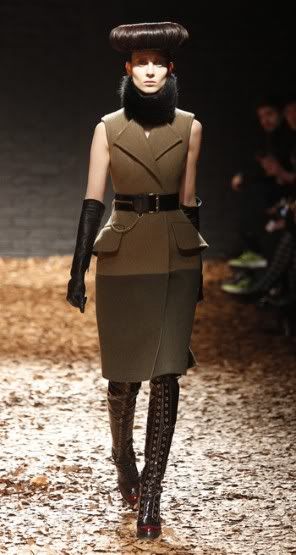
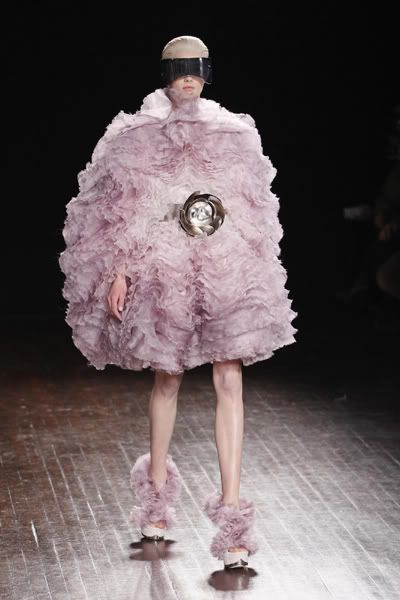
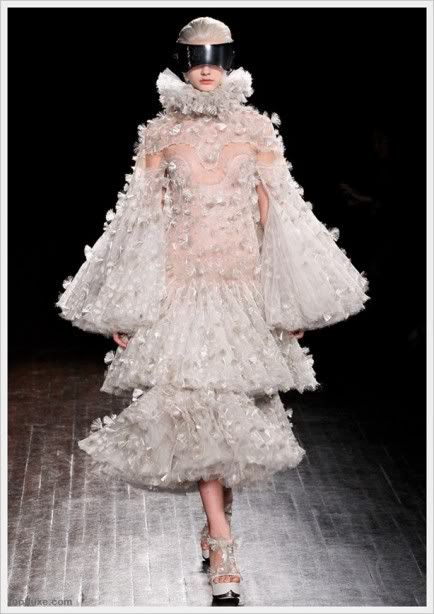
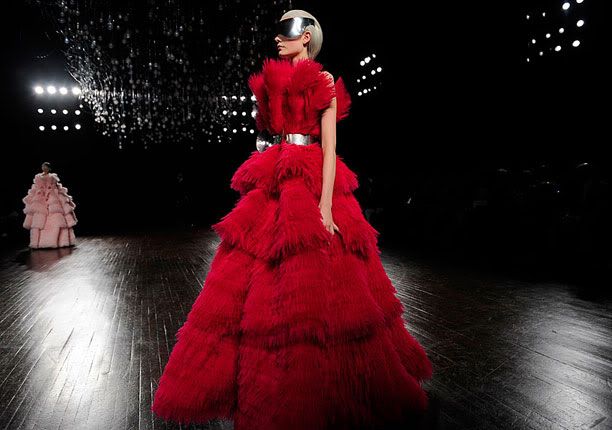
The Alexander McQueen Fall/Winter 2012 2013 collection by Sarah Burton is finished with feathers or is completely made of feathers paired with Levar Burton Geordi La Forge, of Star Trek : The Next Generation, inspired, glasses. At least with Alexander McQueen Haute Couture line that is. With McQ on the other hand it took me a few minutes to realize that it is how the female models hair was styled and not a fur hat. A few of the pieces I could actually find something to like about while a very few other pieces seemed to have grown on me. Of course my two favorite pieces from Alexander McQueen Collection are of course red and black. There is a dress from McQ that is a black floral that has a 1950's vintage feel that I like plus one that is a floral print. But the hair style on the models... EGADS!
So here is the Alexander McQueen Fall/Winter 2012 2013 and the McQ 2012 2013 collection. I hope you find some pieces to enjoy. And yes I will put in a thought or two on some of it.
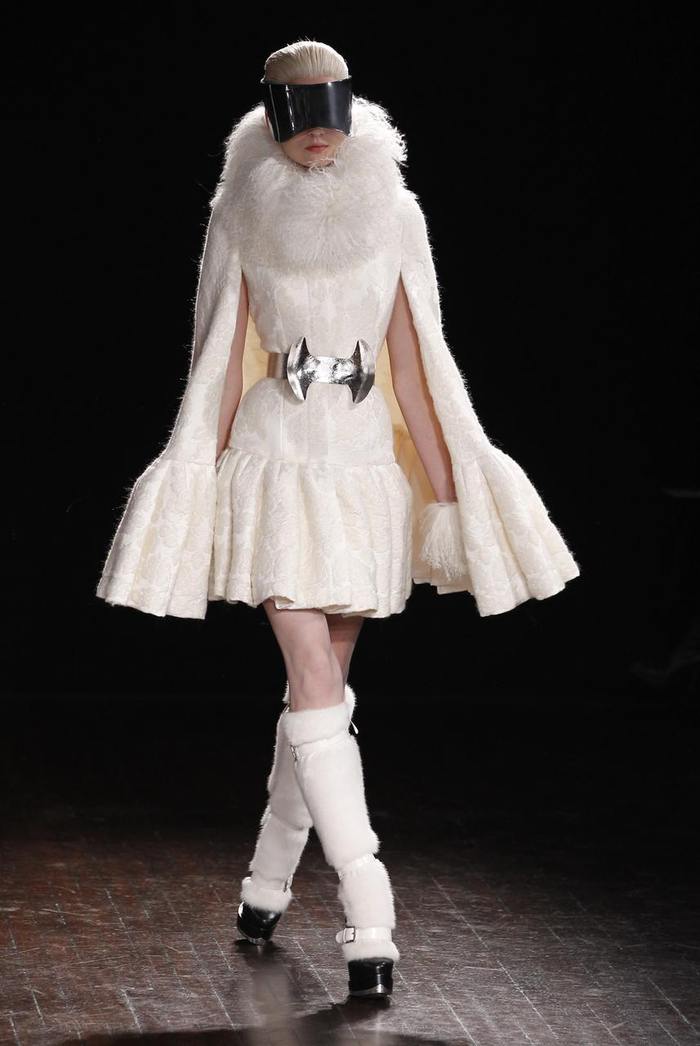
Now this dress and cape is very nice. The only drawbacks are that you would probably freeze wearing it. With the exceptions of your neck and feet. And those shoes look like pipe insulation that gets put on outside pipes when a hard freeze is predicted.
If you want a pink flocked Christmas tree this Christmas season here it is for you
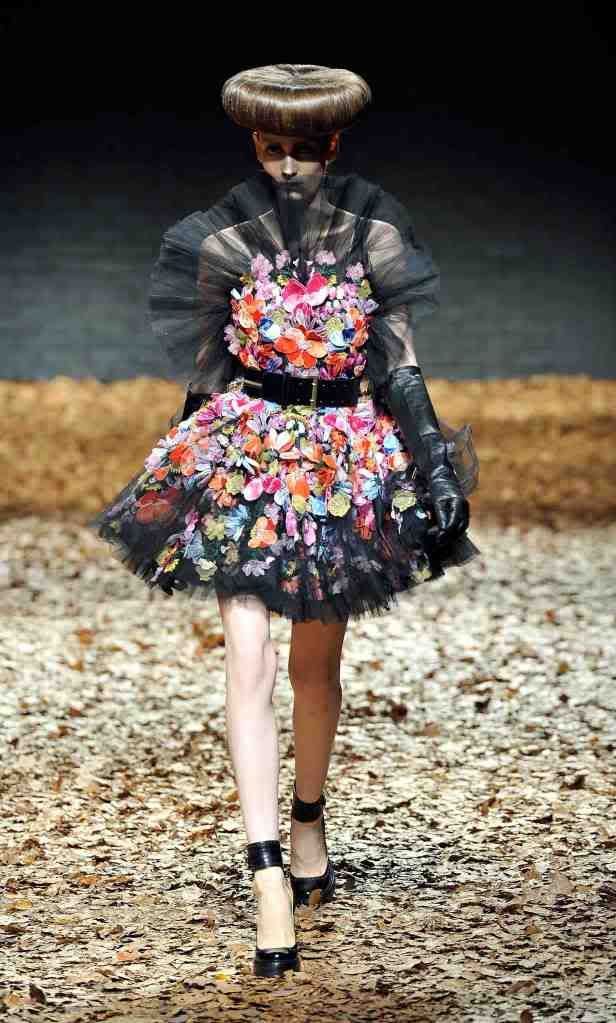
This outfit really isn't all that bad. Bit of Morticia Addams feel for winter. That is probably why this piece grew on me , I love Morticia Addams.
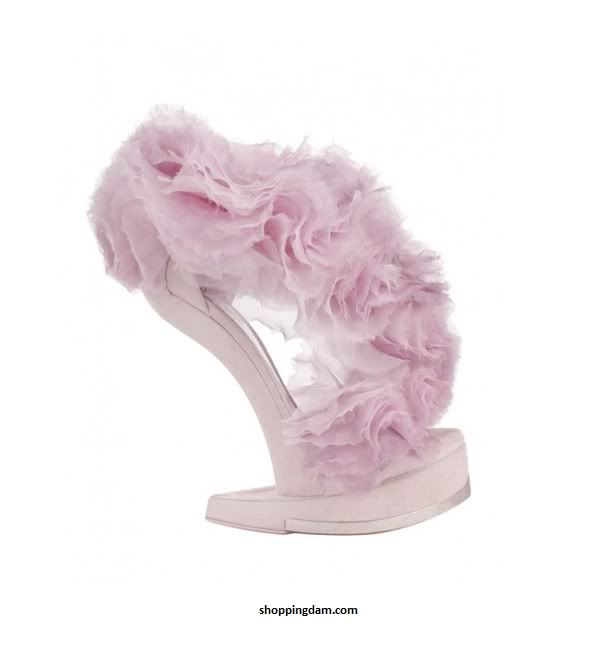
I love the pink. But of course common sense is to put the shoe out on display as a piece of art because there is no way to walk in them. Unless you don't mind walking on your toes.
First McQ piece. This has a 1940's feel to it. I actually do love this piece and the hair actually goes well with this
This is a favorite of mine.
Alexander McQueen Fall/Winter 2012 2013 Collection
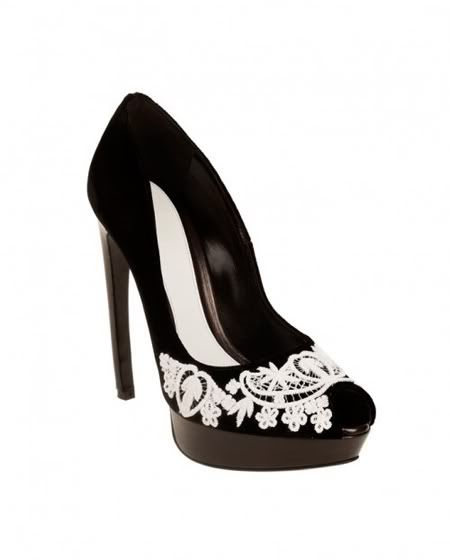
The Alexander McQueen shoes that have heels and are real shoes are very nice and stylish
She looks depressed. But I do like the outfit
Love the jacket!
McQ Menswear - a bit dashing
Like the McQ dress just not the dour looking model
A lot of these McQ pieces seem to be severe. But that maybe just due to the hair and make-up, very totalitarian.
A pinkish walking rosette
Maddona-ish
Frumpy, Dumpy and Saggy
This I actually find to be kind of cute.
This shoe reminds me of a Clydesdale horse's hoof.
I decide that today's would be Catherine, Duchess of Cambridge, nee Middleton, in a red Alexander McQueen dress set that she wore to the Queen's Diamond Jubilee River Pageant Flotilla on June 2,2012. Yes, I know two other people have worn the dress, one won't be mentioned because she stuck her rump in the air and made a fortune and the other one, Tulisa, I have never heard of. That silver pair of shoes that the one who shall remain nameless wore is not good. If Tulisa had worn a solid or a peep toe black leather pump instead of looking like she had black spiders on her feet, she would have looked better. But with that being said, Kate outshined them by unmeasurable fathoms. She looked quite stunning in the red Alexander McQueen design and nude coloured shoes. BRAVO!
"When the Levee Breaks" is the eighth and last song on Led Zeppelin IV. "When the Levee Breaks" was originally written and recorded by Delta blues musician and songwriter Kansas Joe McCoy and his wife, American blues guitarist, vocalist and songwriter, Memphis Minnie in 1929. This song is in reaction to the Great Mississippi Flood of 1927, that ravaged the state of Mississippi and surrounding areas. Many of the homes and the agricultural economy in the Mississippi Basin were destroyed and devastated. As a result, many people fled to the cities in the Midwest, which contributed to the "Great Migration" of African-Americans in the first half of the 20th century. "When the Levee Breaks" main focus is of Greenville, Mississippi when more than 13,00 residents in and around the area evacuated to a nearby, unaffected levee for its shelter at high ground. The commotion that would have been caused if this and other levees had broken is the underlying theme of the song.
The original lyrics to "When the Levee Breaks" by Kansas Joe McCoy and Memphis Minnie:
WHEN the LEVEE BREAKS
If it keeps on rainin', the levees goin' to break
If it keeps on rainin', the levees goin' to break
And the water gonna come in, and have no place to stay.
Well all last night I sat on the levee and moan
Well all last night I sat on the levee and moan
Thinkin' 'bout my baby and my happy home
If it keeps on rainin', the levees goin' to break
If it keeps on rainin', the levees goin' to break
And all these people have no place to stay
Now look here mama what am I to do?
Now look here mama what am I to do?
I ain't got nobody to tell my troubles to
I works on the levee mama both night and day
I works on the levee mama both night and day
I ain't got nobody, keep the water away
Oh cryin' won't help you, prayin' won't do no good
Oh cryin' won't help you, prayin won't do no good
When the levee breaks, mama, got you to lose
I works on the levee, mama both night and day
I works on the levee, mama both night and day
I works so hard, to keep the water away
I had a woman, she wouldn't do for me
I had a woman, she wouldn't do for me
I'm goin' back to my used to be
I's a mean old levee, cause me to weep and moan
I's a mean old levee, cause me to weep and moan
Gonna leave my baby, and my happy home
Now for the Led Zeppelin version of "When the Levee Breaks". It was recorded at Headley Grange in December of 1970 to March of 1971 with the use of the Rolling Stones Mobile Studio. As with the other songs on ''Led Zeppelin IV'' the song was tried unsuccessfully to be recorded at Island Studios at the start of the recording sessions.
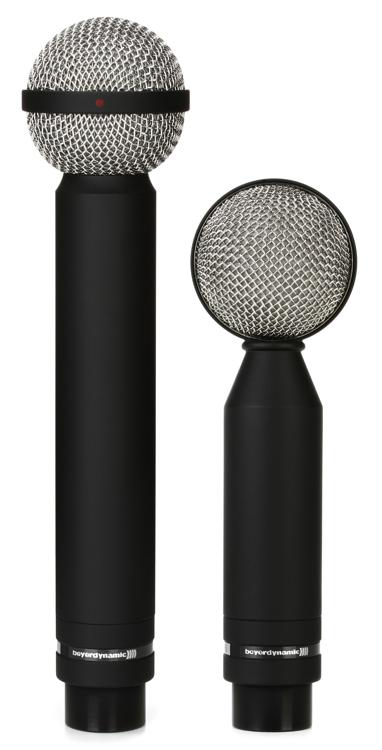
According to Jimmy Page, the song's structure "was a riff that I'd been working on, but Bonzo's drum sound really makes a difference on that point." Engineer Andy Jones recorded the famous drum performance by putting John Bonham and a new Ludwig drum kit at the bottom of a stairwell and recording the drum performance using two Beyerdynamic M160 microphones, at the top of the stairwell, giving the distinctive resonant but slightly muffled sound.
Back aat the Rolling Stones' mobile studio, Bonzo compressed the drum sound through two channels and added an echo through Pages Binson echorec 2 unit.
Page recorded Robert Plant's harmonica part using the backward echo technique, putting the echo ahead of the sound when mixing, creating a distinct effect.
Binson Echorec 2
"When the Levee Breaks" was recorded at a different tempo, then slowed down, which explains the 'sludgy' sound particularly on the guitar and harmonica solos. Because of the heavy studio production of the song, "When the Levee Breaks" was difficult to recreate live.Led Zeppelin only performed the song in the early stages of their 1975 U.S. Tour.
This is also the only song not to be re-mixed after a supposedly disastrous mixing job in the U.S. ( the rest of the tracks were mixed again in England). The original mixing of the song was kept in its original form.
WHEN the LEVEE BREAKS
(Led Zeppelin version)
If it keeps on rainin', the levee's goin to break,
If it keeps on rainin', the levee's goinin' to break.
When the Levee Breaks I'll have no place to stay.
Mean old levee taught me to weep and moan,
Lord, the mean old levee taught me to weep and moan.
Got what it takes to make a mountain man leave his home,
Oh, well, oh, well,oh, well.
Don't it make you fell bad,
When you're tryin' to find your way home,
You don't know which way to go?
If you go South,
They go no work to do,
If you don't know about Chicago.
Cryin' won't help you, prayin' won't do you no good,
Now, cryin won't help you, prayin' won't do you know good.
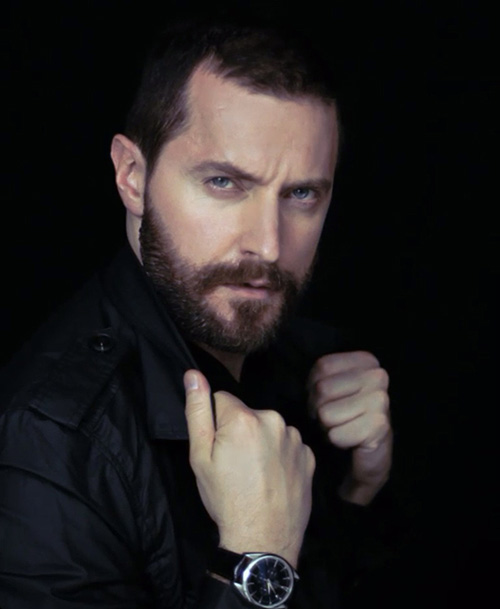
English actor Richard Armitage was born on August 22, 1971 in Leicester, England.In Brockington College in Enderby he studied music, playing the cello in school and local orchestras, while at the same time he was learning to play the flute. Richard Armitage then went on to Pattinson College in Coventry, England where he continued his interest in music and expanding his education to include dance and acting.
In order to get his Equity Card, at the age of 17 Richard Armitage joined a circus in Budapest, Hungary for six weeks. Upon his return to England he pursued a career in musical theater, performing in such plays as "Cats" as Admetus and Macavity. Being unhappy with this career path Richard at the age of 22, enrolled at the London Academy of Music and Dramatic Art in order to study acting further.
After completing London Academy of Music and Dramatic Art three year program he went back to work on the stage as a member of the supporting players with the Royal Shakespeare Company's "Macbeth" and "Hamlet", as well as "The Duchess of Malfi". Also while taking a series of small television and film roles, he acted in the Birmingham Repertory Theater production of "Four Alice Bakers".
Angus Macduff
In 2002 Richard Armitage landed a minor role in the BBC drama "Sparkhouse" playing the shy,yet noble John Standring. After this experience Richard went on to act in a variety of supporting roles in "Cold Five", "Between the Sheets" and "Ultimate Force" His first leading role was that of John Thornton in the 2004 BBC adaption of Elizabeth Gaskell's "North and South"
Look back
2005 saw Richard appearing in the BBC's "Shakespeare Re-Told" series as Peter MacDuff in "Macbeth" and appeared in an episode of "Inspector Linley Mysteries" called "In Divine Proportion" as the recovering gambling addict, Phillip Turner. He portrayed the young Claude Monet in the 3 part factual drama on BBC and as Dr. Alec Track on ITV's medical series, "The Golden Hour".
Alec Track
Courtesy of Richard Armitage, Guy of Gisborne came to life in the 2006 BBC series "Robin Hood". The series ran until march 28,2009 due to the departure of Jonas Armstrong, who played Robin Hood.
2006 saw him in the 2part Christmas special of "The Victor of Dibley" as the vicar's love interest and eventual husband. In 2007 he played biker Ricky Deeming in the television detective drama "George Gently".And he was also in the BBC Four production of "Miss Marie Lloyd - Queen Of the Music Hall" playing Percy Courtenay, Marie Lloyd's first husband. He also appeared in Granada TV production of Agatha Christie's "Ordeal By Innocence" as Phillip Durant.
On October 27,2008 he joined the British spy show "Spooks" ( MI:5 In the U.S.) in series 7 as the character Lucas North. During the filming of the series he allowed himself to be waterboarded for a flashback sequence. He began filming series 8 of "Spooks" in March of 2009 and that started airing in November of 2009. In series 9, which began airing in late September 2010, his last scene took place in a confrontation with Harry Pearce on the roof of the Enver Tower from which he disappeared after having been discovered to have stolen someone else's identity. In episode 7 his true name was revealed as John Bateman and at the end of this series his status is unknown.
He appeared in BBC1 drama "Moving On" as John Mulligan in May of 2009.
In May of 2010 he starred in "Strike Back" for Sky 1 as John Porter. A second series of "Strike Back" was commissioned by Sky 1. It started airing in August of 2011 but Richard has been filming the movie "The Hobbit" in New Zealand, in which he plays dwarf Thorin Oakshield and therefore is only appearing as a guest star in the second series.
In "Captain America : The First Avenger" movie was released in July of 2011. In this movie Richard Armitage played Nazi spy Heinz Kruger. Even though this role was small, Richard gave it his full commitment, by reading the biography of the German spy, Erich Gimpel, who had been sent to sabotage the Manhattan Project.